R&D
R&D
RealSpace is based on a simple observation: digital eye strain is not only a display problem. It is also an optical viewing problem.
Modern displays have become brighter, sharper and faster, but the basic viewing geometry has changed little. Users still focus and align their eyes at a fixed near distance for extended periods. In screen-intensive work, this can contribute to visual discomfort, fatigue and dry-eye symptoms.
Scientific basis
The RealSpace approach is informed by research into digital eye strain, accommodation, vergence, dry eye and prolonged display work. The core hypothesis is that altering the optical viewing geometry of a conventional display can reduce the visual demand associated with sustained near-screen use.
This is distinct from blue-light filtering or display adjustment. RealSpace does not primarily change the spectrum or brightness of the screen. It changes the way the screen is optically presented to the eyes.
Validation status
Early measurements, optical modelling and pilot user reports are consistent with the predicted reduction in accommodative demand and altered perception of depth. These findings are preliminary. Formal clinical evaluation is planned to assess usability, safety, symptom burden and acceptability in a defined professional cohort.
Research boundaries
RealSpace does not currently claim to improve diagnostic accuracy, replace clinical judgement, or increase reporting throughput. Any future performance-related research would require separate validation. The current research focus is visual comfort, symptom burden, usability and safe integration into existing workstations.
Areas informing the programme
- Digital eye strain / computer vision syndrome
- Screen-associated dry-eye symptoms
- Accommodation and vergence in near work
- Radiology reporting workload and workforce sustainability
- Visual ergonomics and display-screen equipment guidance
Citations available on request.
Prototype development
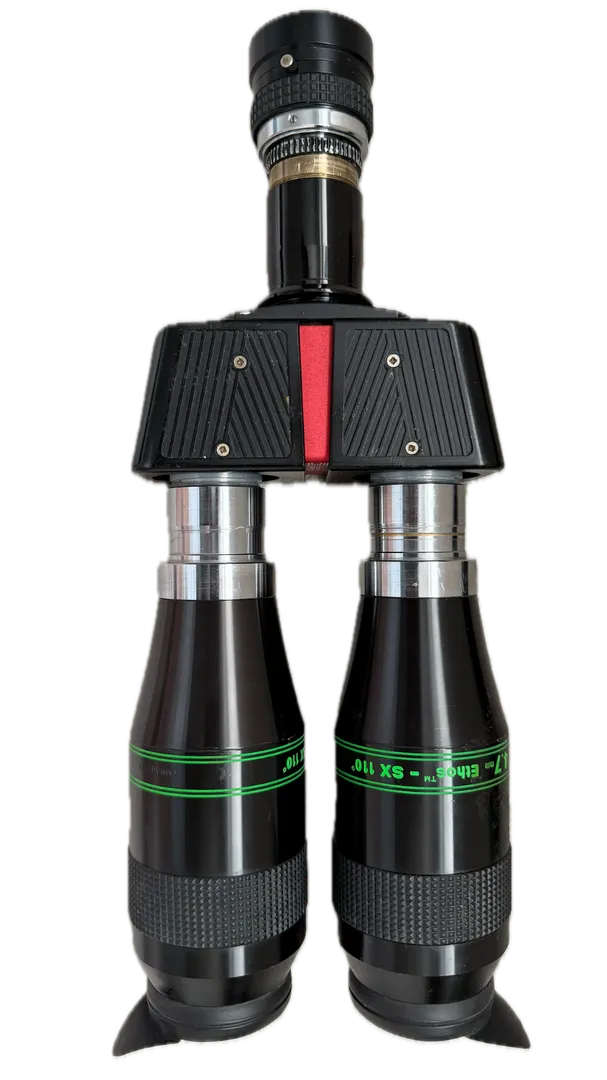
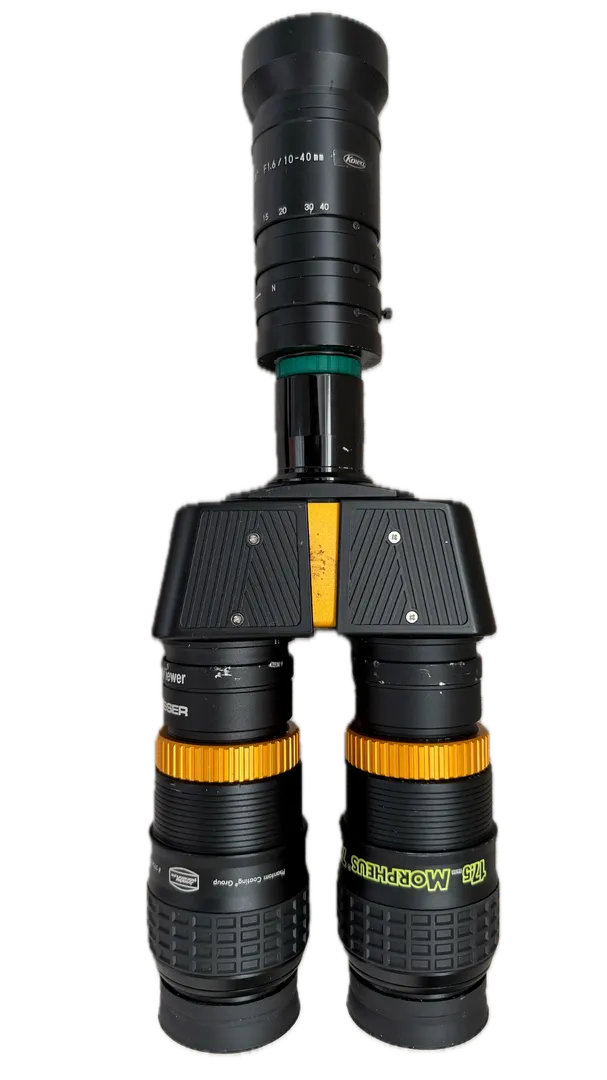
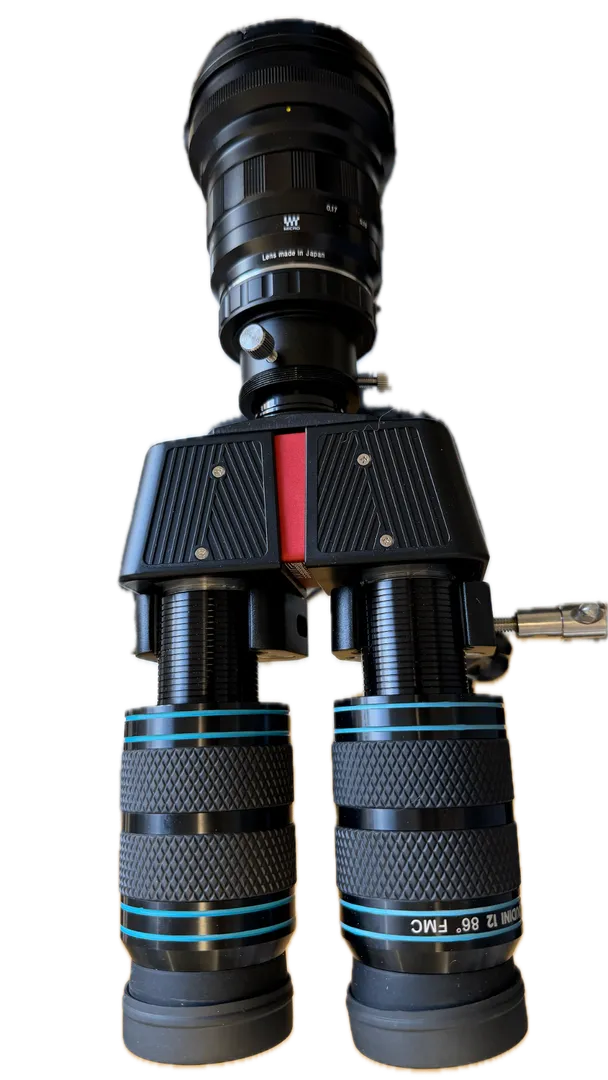
RealSpace has progressed through several prototype generations, from early optical demonstrators to a wearable single-lens design and the current dual-freeform concept. Each stage refined the viewing geometry and informed the optical specification.
Galilean prototype
The Galilean prototype series established the core viewing principle as a set of compact demonstrator optics.
Interim prototype
An interim hardware prototype, developed with support from Innovate UK, realised the optical approach as a bench-built twin-lens viewing assembly. It was used to validate the viewing geometry and to inform the interim optical specification ahead of the move toward compact, manufacturable designs.
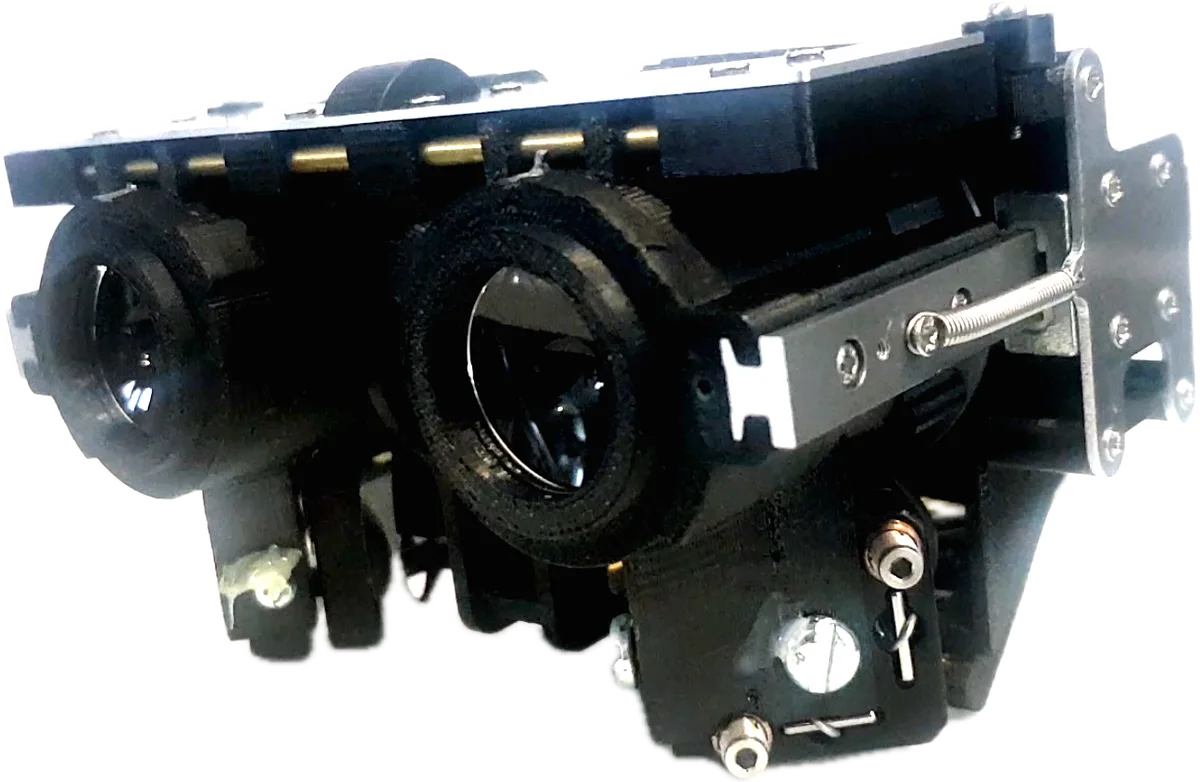
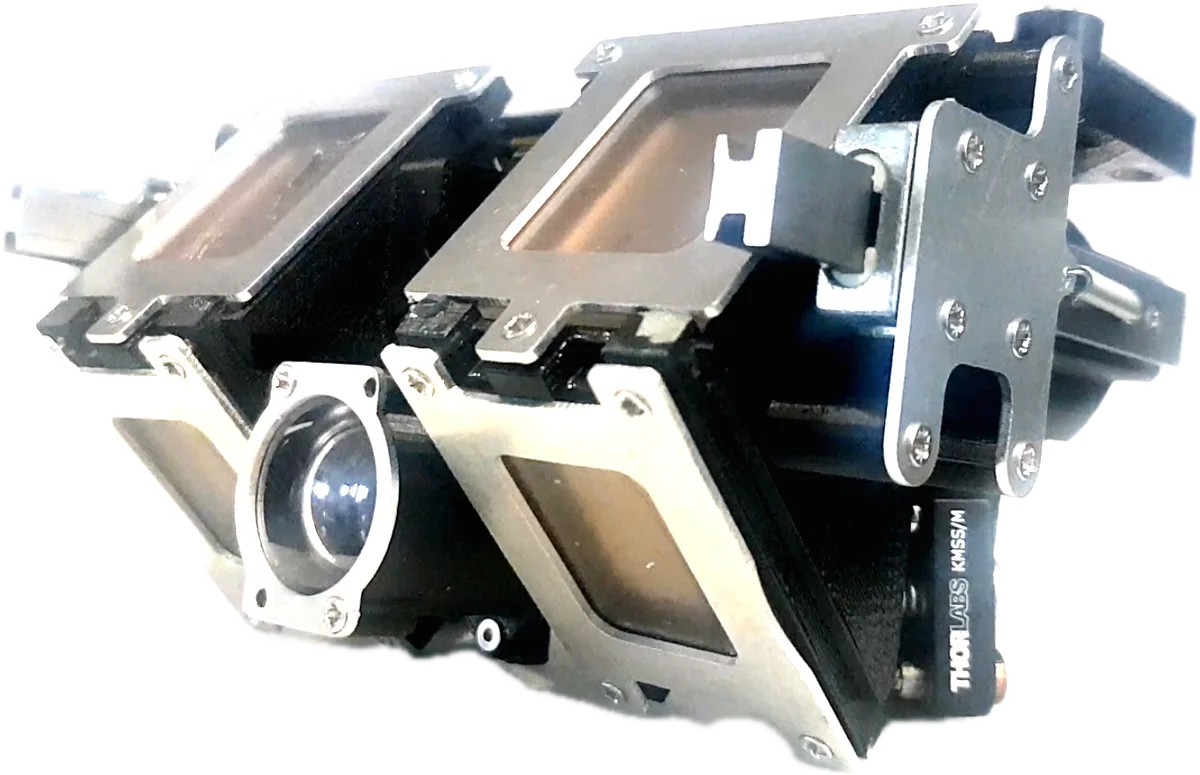
Supported by Innovate UK — Emerging and Enabling Technologies (project 132800).
Single-lens prototype
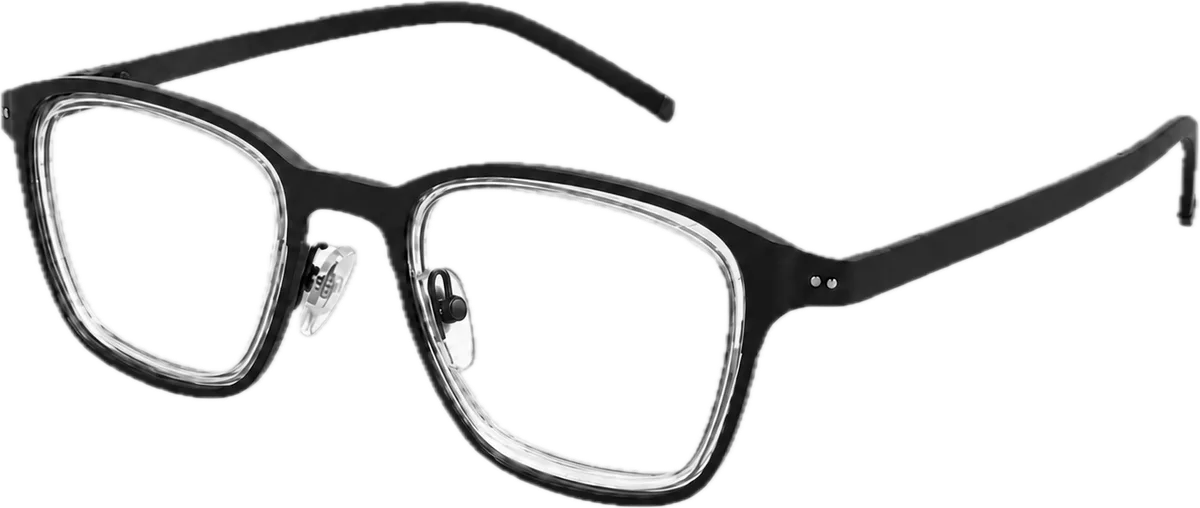
A subsequent prototype, developed in collaboration with Oxford Optical and Norville, refined the system to a single lens per eye in a wearable spectacle frame — a step toward a comfortable, manufacturable form factor.
Dual-freeform concept
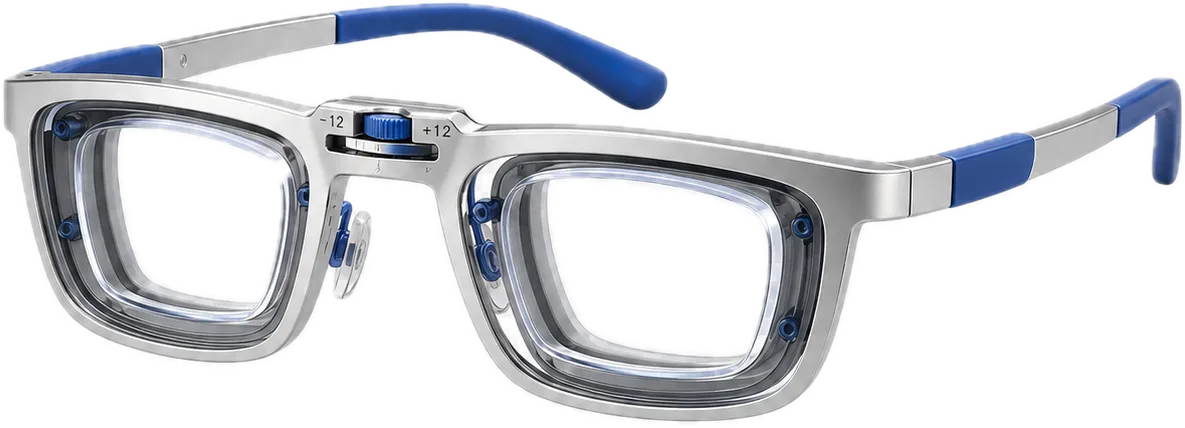
The current design direction is a compact, wearable dual-freeform optic with an adjustable setting, refining the single-lens approach toward a comfortable everyday form.
Disclaimer
RealSpace is under development and is not yet available as a certified medical device. Current research focuses on safety, usability, visual comfort and symptom reduction in screen-intensive professional use. RealSpace does not modify clinical images, provide diagnostic decision support, or replace professional judgement.